
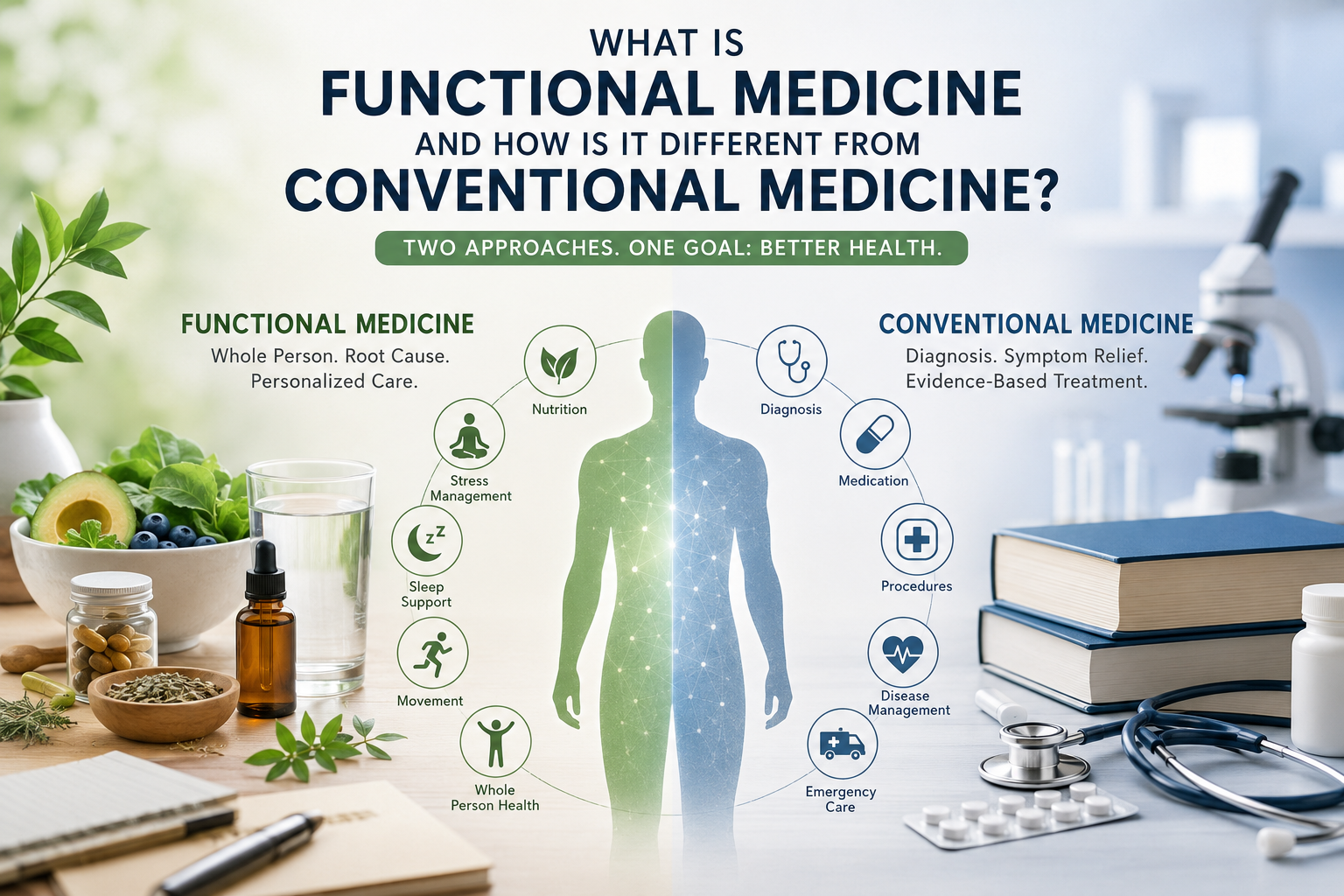
Functional medicine explores how medical history, lifestyle, nutrition, environment, and interconnected body systems may influence health. Conventional medicine provides essential diagnosis, treatment, screening, medication management, procedures, and emergency care.
These approaches do not have to compete. When used responsibly and coordinated by qualified professionals, they may contribute to a more personalized and complete healthcare plan.
Healthcare is not always as simple as identifying one symptom and choosing one treatment. A person may experience fatigue, digestive discomfort, difficulty sleeping, weight changes, brain fog, or other concerns that appear unrelated but may be influenced by several overlapping factors.
Conventional medicine is essential for diagnosing diseases, treating infections, managing chronic conditions, performing medical procedures, and responding to urgent health problems. Functional medicine takes a broader, highly personalized approach by examining how medical history, lifestyle, nutrition, environment, and different body systems may be connected.
These approaches do not have to compete. Understanding what each one offers can help you make informed decisions and build a healthcare plan that matches your needs.
Key Takeaways
- Functional medicine uses a personalized, systems-based approach to explore health patterns and possible contributing factors.
- Conventional medicine is essential for diagnosis, medication, surgery, screening, specialist care, and emergency treatment.
- Both approaches may include nutrition, lifestyle support, prevention, testing, and ongoing monitoring.
- Functional medicine should not replace necessary medical treatment or urgent care.
- The safest approach is evidence-informed, collaborative, and coordinated by qualified healthcare professionals.
Table of Contents
- What Is Functional Medicine?
- What Does “Root Cause” Mean?
- How Does Functional Medicine Work?
- What Is Conventional Medicine?
- Functional Medicine vs Conventional Medicine
- Key Differences Between the Two Approaches
- Functional Medicine vs Integrative Medicine
- Functional Medicine vs Alternative Medicine
- What Happens During a Consultation?
- Who May Consider Functional Medicine?
- What Does Research Say?
- How to Choose a Practitioner
- Can Both Approaches Work Together?
- Frequently Asked Questions
What Is Functional Medicine?
Functional medicine is a personalized, systems-based approach to healthcare. It considers how genetic, environmental, biological, behavioral, and lifestyle factors may influence a person’s health.
Rather than focusing only on a diagnosis, a functional medicine practitioner may also explore how symptoms developed, what factors may be contributing to them, and whether different concerns could be connected.
The Institute for Functional Medicine describes the model as an approach that examines genetic, environmental, and lifestyle influences while creating individualized care plans. Whole person health similarly considers biological, behavioral, social, and environmental factors instead of viewing each organ or symptom in isolation.
A Functional Medicine Evaluation May Consider:
- Current symptoms and when they began
- Personal and family medical history
- Eating habits and nutritional patterns
- Sleep quality and daily energy
- Physical activity and movement
- Stress and emotional wellbeing
- Medications and dietary supplements
- Digestive and metabolic health
- Hormonal health
- Environmental exposures
- Previous illnesses, injuries, and procedures
- Personal goals and daily challenges
This detailed information helps the practitioner identify patterns and develop a care plan that reflects the individual rather than relying on a single standard recommendation.
What Does “Root Cause” Mean in Functional Medicine?
The term “root cause” is commonly associated with functional medicine. However, it should not be interpreted as meaning that every health condition has one hidden cause.
Many symptoms can have several possible explanations.
Fatigue, for example, may be related to poor sleep, anemia, thyroid dysfunction, infection, medication side effects, stress, nutritional deficiencies, mood disorders, or several factors occurring together. Digestive symptoms may also be influenced by diet, medication, infection, stress, food intolerance, inflammatory conditions, or changes in gut function.
A responsible root-cause evaluation does not assume that one issue explains every symptom. It uses medical history, appropriate examination, validated testing, and clinical reasoning to identify possible contributing factors.
The goal is not to ignore symptoms. The goal is to understand the wider context in which those symptoms are occurring.
How Does Functional Medicine Work?
Functional medicine usually begins with a detailed discussion of the patient’s symptoms, medical history, lifestyle, and health goals.
The practitioner may create a timeline showing when symptoms began, what changed around that time, which treatments have already been tried, and whether any patterns have appeared.
According to the Institute for Functional Medicine, this model often includes extensive history taking, evaluation of lifestyle factors, and consideration of social and environmental influences.
A functional medicine care plan may include the following areas.
Nutrition Support
The practitioner may review meal patterns, hydration, protein intake, fiber intake, food quality, digestive responses, and possible nutritional deficiencies.
Recommendations should be practical, balanced, and appropriate for the individual’s medical needs. Unnecessarily restrictive diets should be avoided unless there is a clear clinical reason and suitable professional supervision.
Sleep Support
Sleep affects energy, concentration, mood, appetite, recovery, and daily function. A practitioner may explore sleep duration, bedtime habits, screen use, caffeine intake, nighttime waking, snoring, stress, and possible sleep disorders.
Persistent sleep problems may require evaluation by an appropriately qualified healthcare professional.
Stress Management
Long-term stress can affect sleep, digestion, pain, appetite, concentration, and health behaviors. A care plan may include relaxation techniques, mindfulness, counseling, breathing exercises, improved routines, or referral to a mental health professional when appropriate.
Physical Activity
Movement recommendations may be personalized according to the individual’s age, symptoms, fitness level, mobility, medical conditions, and goals.
The plan may include walking, strength training, mobility exercises, rehabilitation, or another suitable form of activity.
Laboratory Testing
A practitioner may review previous test results and determine whether additional evaluation is appropriate.
Testing should have a clear clinical purpose. More tests do not automatically lead to better care. Results must be interpreted alongside symptoms, medical history, physical findings, medications, and other relevant information.
Medication and Supplement Review
A functional medicine visit may include a review of prescription medications, nonprescription products, vitamins, herbs, and dietary supplements.
This is important because supplements can cause side effects or interact with medications. Patients should tell every member of their healthcare team about all products they use.
Ongoing Follow-Up
Health changes often take time. Follow-up appointments may be used to review progress, discuss test results, adjust recommendations, address challenges, and decide whether another healthcare professional should be involved.
What Is Conventional Medicine?
Conventional medicine is the standard healthcare system used by medical doctors, nurses, pharmacists, therapists, and other licensed healthcare professionals.
It uses established diagnostic methods and treatments such as medication, rehabilitation, medical procedures, radiation, and surgery when appropriate.
Conventional Medicine Is Especially Important For:
- Emergency and urgent care
- Serious infections
- Acute injuries
- Surgical conditions
- Pregnancy and maternity care
- Cancer diagnosis and treatment
- Prescription medication management
- Routine health screening
- Monitoring chronic diseases
- Specialist evaluation
- Severe or rapidly worsening symptoms
It would be inaccurate to say that conventional medicine only treats symptoms. Many conventional healthcare professionals also focus on prevention, lifestyle, nutrition, vaccination, early diagnosis, rehabilitation, and long-term disease management.
Functional Medicine vs Conventional Medicine
Functional medicine and conventional medicine share the goal of improving health, but they may organize care differently.
| Area | Functional Medicine | Conventional Medicine |
|---|---|---|
| Primary focus | The individual’s history, symptoms, lifestyle, environment, and possible contributing factors | Diagnosis, disease management, symptom relief, prevention, and established treatment |
| Care approach | Often personalized and systems-based | Often diagnosis-based and guided by clinical standards |
| Health history | May include an extended review of lifestyle and symptom patterns | Usually focuses on the main complaint and relevant medical history |
| Testing | May use standard tests and carefully selected additional testing | Uses validated tests based on symptoms, screening guidance, and clinical need |
| Lifestyle support | Often forms a central part of the care plan | Commonly included when relevant to prevention or disease management |
| Medication | May be included depending on clinical need and professional licensing | Commonly used when supported by diagnosis and medical evidence |
| Supplements | May be considered after evaluating need, quality, safety, and interactions | May be recommended for deficiencies or other appropriate indications |
| Acute care | Not a replacement for urgent or emergency treatment | Essential for emergencies, injuries, severe illness, and surgical care |
| Follow-up | May track symptoms, habits, goals, and response to a personalized plan | May monitor symptoms, diagnoses, medication response, and clinical measurements |
The differences are not always absolute. Practitioners work in different ways, and many conventional clinicians already provide personalized, preventive, and lifestyle-focused care.
Key Differences Between Functional and Conventional Medicine
1. The Scope of the Evaluation
Conventional care often begins by identifying the most likely diagnosis based on symptoms, examination findings, and appropriate testing.
Functional medicine may expand this evaluation by spending more time exploring nutrition, sleep, stress, activity, environment, family history, and the possible relationships among different symptoms.
Both methods can be valuable. The right level of evaluation depends on the person’s condition and clinical needs.
2. The Structure of the Care Plan
Conventional treatment is often guided by a diagnosis and established clinical recommendations.
Functional medicine plans may be more individualized around the patient’s history, lifestyle, symptoms, preferences, and goals. However, personalization should not mean abandoning evidence-based care or proven medical treatment.
3. The Role of Lifestyle
Lifestyle can be important in both approaches.
Functional medicine often places nutrition, sleep, movement, stress management, and behavior change at the center of the care plan. Conventional clinicians may also provide lifestyle guidance, particularly when managing cardiovascular risk, diabetes, digestive conditions, weight concerns, sleep problems, and other long-term health issues.
4. The Use of Testing
Conventional medicine typically selects tests based on symptoms, clinical findings, screening recommendations, and the likelihood of a specific condition.
Functional medicine practitioners may sometimes consider a wider selection of tests. However, each test should answer a meaningful clinical question and have adequate evidence supporting its use.
Testing without a clear purpose can lead to unnecessary costs, confusing results, false alarms, or treatments that may not be needed.
5. The Use of Medication
Functional medicine is sometimes presented as an approach that avoids medication, but this is not an accurate definition.
Medication may be necessary for many health conditions. Whether a functional medicine practitioner can prescribe or adjust medication depends on their professional license and scope of practice.
Important: Patients should never stop, reduce, or change prescribed medication without consulting the qualified healthcare professional responsible for their care.
6. Acute Care and Long-Term Care
Conventional medicine is essential when a person needs emergency care, surgery, treatment for a serious infection, management of a severe condition, or rapid diagnostic evaluation.
Functional medicine is generally more focused on long-term health patterns, lifestyle support, ongoing symptoms, preventive strategies, and coordinated care.
It should not be used as a substitute for urgent or emergency treatment.
Is Functional Medicine the Same as Integrative Medicine?
Functional medicine and integrative medicine share several principles, but they are not exactly the same.
Integrative medicine combines conventional treatment with complementary approaches that are considered appropriate, safe, and supported by evidence. It may include conventional medical care alongside nutrition, mindfulness, physical therapies, counseling, or other supportive practices.
Functional medicine often places greater emphasis on exploring the relationships among symptoms, body systems, lifestyle, environment, and personal history.
Integrative healthcare is generally described as coordinated care that combines conventional and complementary approaches while focusing on the whole person.
Is Functional Medicine the Same as Alternative Medicine?
No.
Complementary care is used alongside standard medical treatment. Alternative care is used instead of standard treatment. Integrative care combines conventional treatment with selected complementary approaches.
Functional medicine should not encourage patients to delay necessary medical evaluation or replace essential treatment with an unproven product or protocol.
Lifestyle changes may support overall health, but they cannot replace emergency treatment, necessary surgery, appropriate medication, cancer care, or specialist evaluation when these are needed.
What Happens During a Functional Medicine Consultation?
The exact process depends on the practitioner, but an initial consultation may include:
- Discussing current symptoms and concerns
- Reviewing personal and family medical history
- Reviewing previous diagnoses and treatments
- Discussing medications and supplements
- Exploring nutrition, sleep, stress, activity, and daily routines
- Reviewing available laboratory results
- Identifying health goals and priorities
- Deciding whether additional evaluation is appropriate
- Developing a personalized care plan
- Scheduling follow-up appointments
A practitioner should clearly explain why a test, supplement, dietary change, or treatment is being recommended.
You should also understand the expected benefits, possible limitations, costs, risks, and available alternatives before making a decision.
Who May Consider Functional Medicine?
People may consider functional medicine when they want:
- More time to discuss their health history
- A personalized nutrition and lifestyle plan
- Help understanding several ongoing symptoms
- Support alongside care from another healthcare professional
- A greater focus on prevention and long-term wellbeing
- A detailed review of sleep, stress, diet, activity, and daily habits
- Coordinated care for complex or persistent concerns
People with digestive symptoms, fatigue, metabolic concerns, sleep difficulties, hormonal symptoms, or weight management challenges may be interested in this type of care.
However, these symptoms can have many possible causes. A qualified medical evaluation remains important, particularly when symptoms are severe, persistent, unexplained, or worsening.
What Does Research Say About Functional Medicine?
Research on complete functional medicine care models is still developing.
A retrospective cohort study reported an association between functional medicine care and improvements in patient-reported quality of life. However, the study was observational, so it could not establish that functional medicine directly caused the improvements. The researchers stated that prospective studies were needed to confirm the findings.
Some individual parts of functional medicine, including appropriate nutrition, physical activity, sleep support, behavior change, and stress management, are supported by broader areas of health research.
Evaluating the complete model can be more difficult because personalized care plans may include several interventions at the same time. This makes it challenging to determine which part of a plan produced a particular result.
Warning Signs to Watch For
Patients should be cautious of anyone who:
- Guarantees a cure
- Claims that one test can explain every symptom
- Recommends large numbers of tests without a clear reason
- Encourages stopping essential medication
- Advises delaying medical diagnosis or treatment
- Promotes one supplement as a solution for many unrelated conditions
- Uses fear to sell expensive treatment programs
- Refuses to coordinate with other healthcare professionals
Responsible care should be transparent about evidence, uncertainty, cost, expected outcomes, and limitations.
How to Choose a Functional Medicine Practitioner
The title “functional medicine practitioner” may be used by people with different levels of education, professional licensing, and clinical experience.
Before beginning care, consider asking:
- What is your professional qualification and license?
- What functional medicine training have you completed?
- Do you have experience with my specific concerns?
- What services are included in the consultation fee?
- How do you decide which laboratory tests are necessary?
- How do you evaluate the evidence behind a treatment?
- How do you check supplement and medication interactions?
- Will you communicate with my other healthcare professionals?
- What happens if my symptoms require specialist care?
- How will progress be measured?
- Will I receive a written care plan?
- What additional costs should I expect?
NCCIH recommends reviewing a practitioner’s education, training, licensing, experience, and willingness to coordinate with other members of the healthcare team.
Can Functional Medicine and Conventional Medicine Work Together?
Yes. In many cases, the approaches can complement each other.
A person may use conventional medicine for diagnosis, medication, screening, specialist care, procedures, or monitoring. Functional medicine may add a more detailed review of nutrition, sleep, activity, stress, environmental factors, and personal health goals.
For example, someone receiving conventional treatment for a chronic condition may also benefit from personalized support with meal planning, sleep habits, physical activity, stress management, and medication adherence.
Good coordination is essential. Every practitioner involved should know about the person’s diagnoses, medications, supplements, test results, and treatment plans.
The safest approach is collaborative, realistic, evidence-informed, and centered on the patient’s individual needs.
Frequently Asked Questions
What is the main goal of functional medicine?
The goal is to understand the individual’s health patterns and explore biological, lifestyle, behavioral, and environmental factors that may be contributing to symptoms. The practitioner then develops a personalized plan based on the person’s needs, history, and goals.
How is functional medicine different from conventional medicine?
Conventional medicine commonly focuses on diagnosis, established treatment, symptom management, prevention, and monitoring. Functional medicine may spend more time exploring lifestyle, personal history, environmental factors, and connections among different symptoms.
Does functional medicine use medication?
It can. Functional medicine is not defined by avoiding medication. Whether a practitioner can prescribe or adjust medication depends on their professional license and scope of practice.
Does functional medicine use laboratory tests?
Yes. It may involve standard laboratory testing and selected additional tests when clinically appropriate. Each test should have a clear purpose and be interpreted alongside symptoms, medical history, medications, and other clinical information.
Is functional medicine scientifically proven?
Evidence varies depending on the specific treatment or recommendation. Many individual components, such as appropriate nutrition, exercise, sleep support, and stress management, have broader scientific support. Research evaluating complete functional medicine care models remains limited and is still developing.
Can functional medicine replace a primary healthcare provider?
Functional medicine should not replace routine screening, emergency treatment, specialist care, essential medication, or necessary medical procedures. It is generally safest when coordinated with the rest of the patient’s healthcare team.
Is functional medicine suitable for everyone?
Suitability depends on the person’s symptoms, medical history, goals, and the practitioner’s qualifications. Anyone experiencing sudden, severe, or worsening symptoms should seek appropriate medical care promptly.
How long does it take to see results?
There is no universal timeline. Progress may depend on the condition, severity of symptoms, treatment plan, consistency, medical history, and individual response. A responsible practitioner should avoid promising guaranteed results.
A Personalized and Collaborative Approach to Health
Functional medicine offers a way to explore how medical history, nutrition, sleep, stress, environment, activity, and different body systems may influence health.
Conventional medicine provides essential diagnosis, treatment, medication management, screening, procedures, surgery, and urgent care. Functional medicine may add a detailed review of personal health patterns and lifestyle factors.
The two approaches do not have to be viewed as opposites.
A thoughtful healthcare plan can combine appropriate medical evaluation with realistic nutrition, movement, sleep, stress, and behavior support. The best approach is one that is safe, evidence-informed, personalized, and coordinated among qualified professionals.
Take the Next Step
A personalized functional medicine consultation gives you an opportunity to discuss your symptoms, medical history, lifestyle, previous test results, and health goals in greater detail.
Learn more about our consultation process and discover whether a whole person approach may be appropriate for your needs.
Medical Disclaimer
This article is provided for educational purposes only. It is not intended to diagnose, treat, cure, or prevent any medical condition and should not be considered a substitute for professional medical advice, diagnosis, or treatment.
Always consult an appropriately qualified healthcare professional regarding symptoms, medications, supplements, laboratory testing, and treatment decisions. Seek prompt medical attention for severe, sudden, or worsening symptoms.